UX research
UI design
AI Flow builder
SaaS


TL;DR
Quick overview of the project impact and approach
Challenge
Customer support agents spending 3-4 hours daily on repetitive manual tasks, slowing response times and reducing team productivity
Approach
User research with support agents, paper wireframing, tested with multiple users across 5 use cases and iterated to 95% success rate
Solution
No-code workflow automation builder with visual flow builder, conditional logic, triggers, actions, and comprehensive error handling
Impact
60% reduction in manual work, 3x faster response times, 14+ customers onboarded, and 95% task completion rate
Timeline
2 Months, 4 Sprints
Team
2 Designers, 1 PM, 3 Devs
14+
customers interested in our support workflow solutions
40+
use cases identified for our support workflow automation
The Problem
Many support agents spend a significant portion of their day on manual, time-consuming tasks.
The Goal
Improved efficiency and more productive support team to provide better customer experiences.
I interviewed support agents and senior software engineers to understand their daily patterns. I mapped 40+ repetitive scenarios and validated top automation use cases.
Key research findings
Time Drain
3-4 hours daily spent on repetitive tasks
"Minimal nodes is better - because it's easier for support"
- Software engineer
Technical barriers
Non-technical users need independence
"I divide flows logically. At max 2-3 goals per flow"
- Customer success engineer
Flexibility Challenges
Users struggle with workflow transitions
"I had to delete a bg flow and create a regular flow again"
- Senior engineer
Top use cases validated
1
No code visual builder
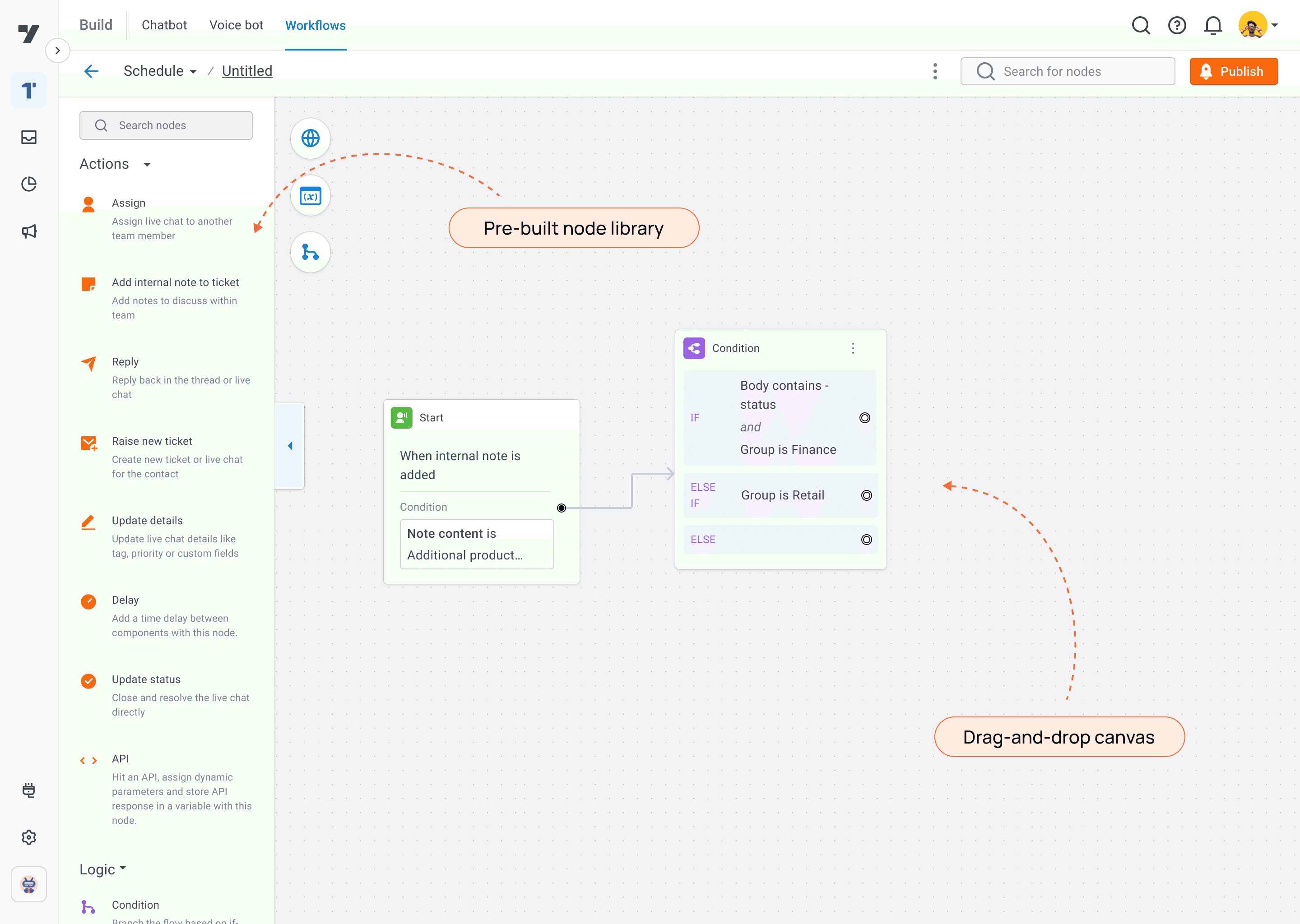
Support agents need to build workflows independently without developer support. Designed a drag-and-drop node-based interface with visual connections.
Addresses: Technical barriers
2
Reduced complexity
Users wanted "minimal nodes, 2-3 goals per flow." Organized nodes into clear categories so agents can quickly find and add what they need without complexity.
Addresses: Time Drain
3
Unified workflow system
Users struggled when switching between different workflow types. Created one consistent builder that handles both conversational and background automations.
Addresses: Flexibility Challenges
Early exploration
Mapping use cases to nodes
I translated the 40+ automation scenarios from research into a node-based system. By mapping common patterns across use cases, I identified the core building blocks needed: triggers (when to start), actions (what to do), and logic (decision points).
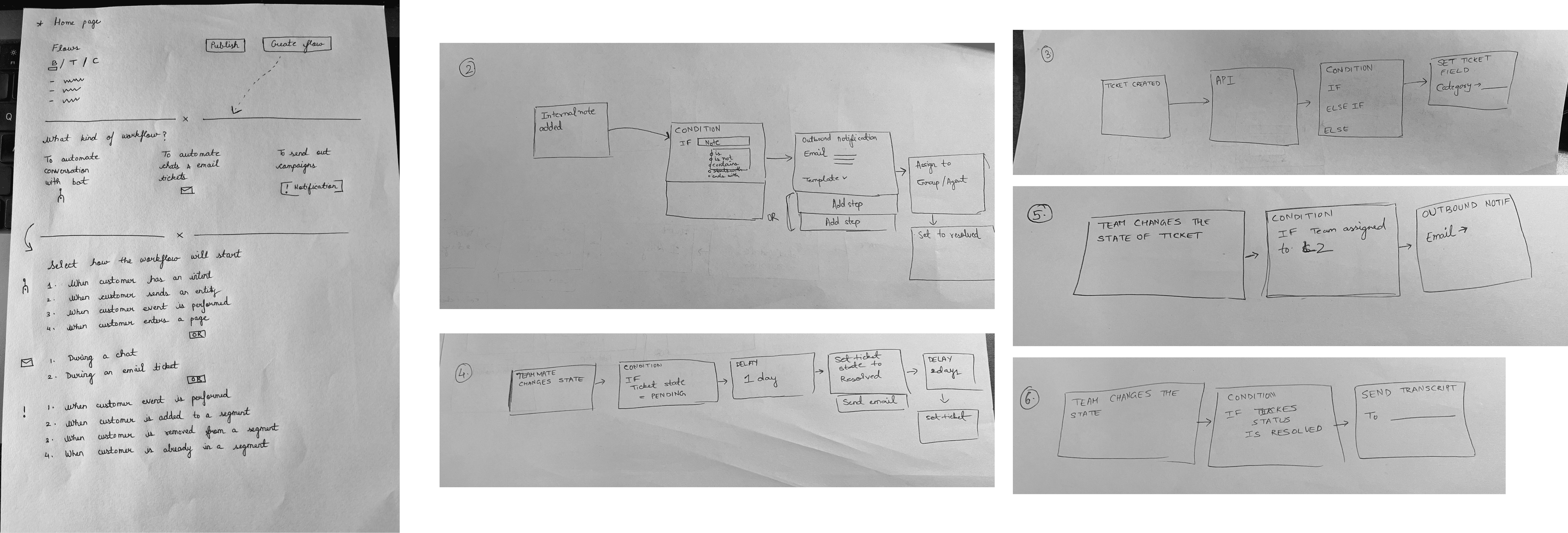
Early wireframes exploring how different use cases would translate into node-based workflows
Testing with real use cases
Validating with users
I tested the design with support agents and engineers using 5 real automation scenarios. Each participant attempted to build workflows independently, allowing me to identify friction points and validate the approach.
Real world scenarios tested
Customer greeting
Personalized welcome messages to greet customers
Internal notes
Auto-trigger and update status when notes are added
Appointment booking
Check service availability by location and display time slots
Database Sync
Schedule weekly automation to fetch and update user data
Banking logic
Voice bot flow with data validation
Tested with 4 users across 5 real-world automation scenarios
Key insights and iterations
1
Onboarding & Feature Discovery
Problem
No introduction to the new feature
Users jumped straight into template selection without context
Confusion about Chat bot vs. Workflows vs. Skills terminology
"Just by reading the term 'Chat bot' and 'Workflows' was not clear what is the difference. After looking at the use cases I got it."
- Software Engineer
Solution
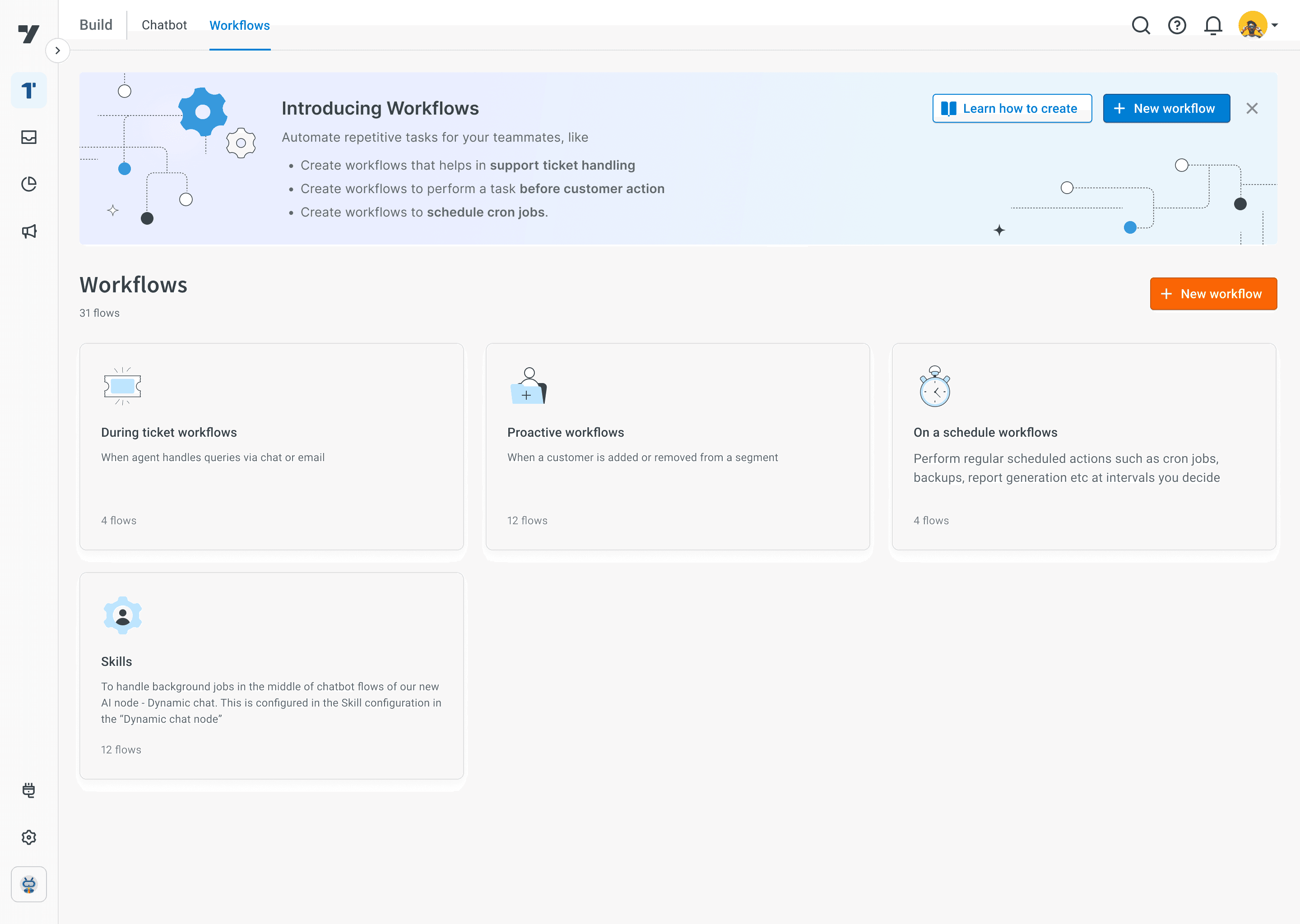
Added an onboarding flow explaining Workflows and Voice bot with clear use case examples.
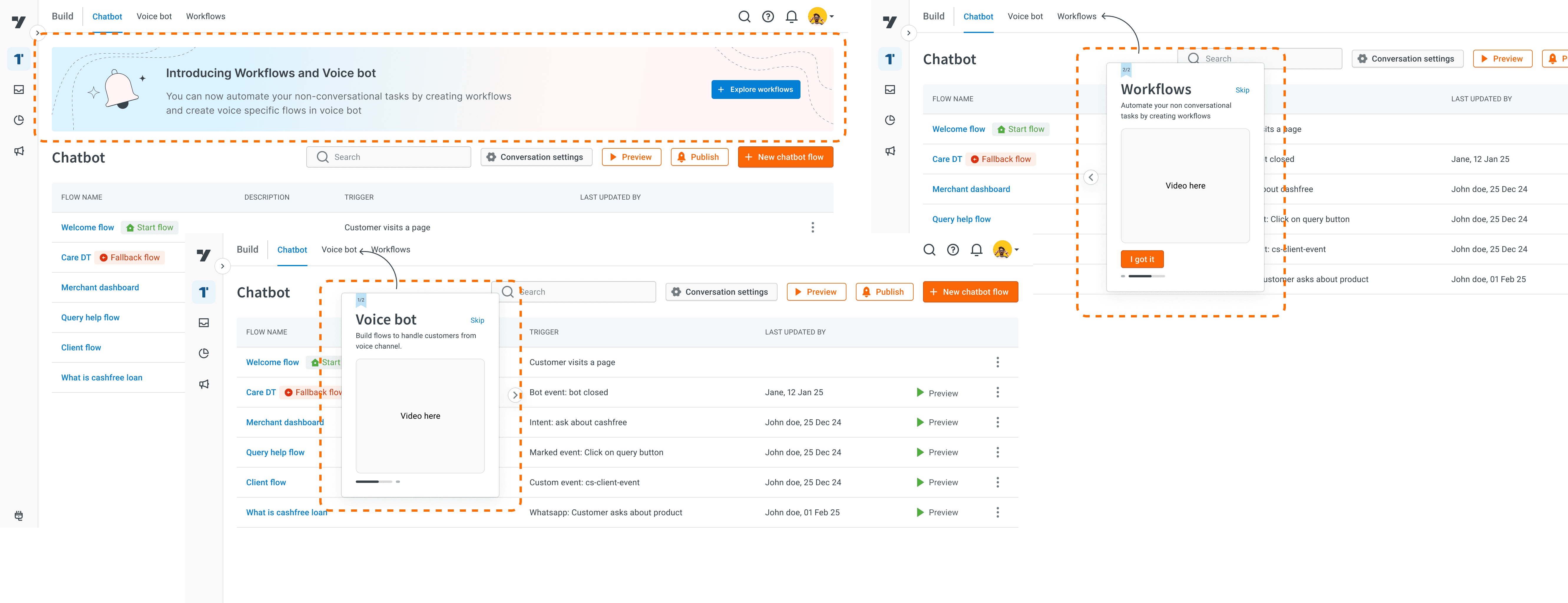
Added an onboarding banner to introduce Workflows, explain key use cases, and provide clear entry points for users
2
Clarity in Language & Copy
Problem
"Chat" appeared in multiple contexts causing confusion
Technical jargon in descriptions
Users wanted concrete examples
"Slight confusion by reading the term 'automatically.' As other flows are also to work automatically."
- Support Agent
Solution
Simplified language throughout, added clear use case examples, and improved workflow type descriptions.
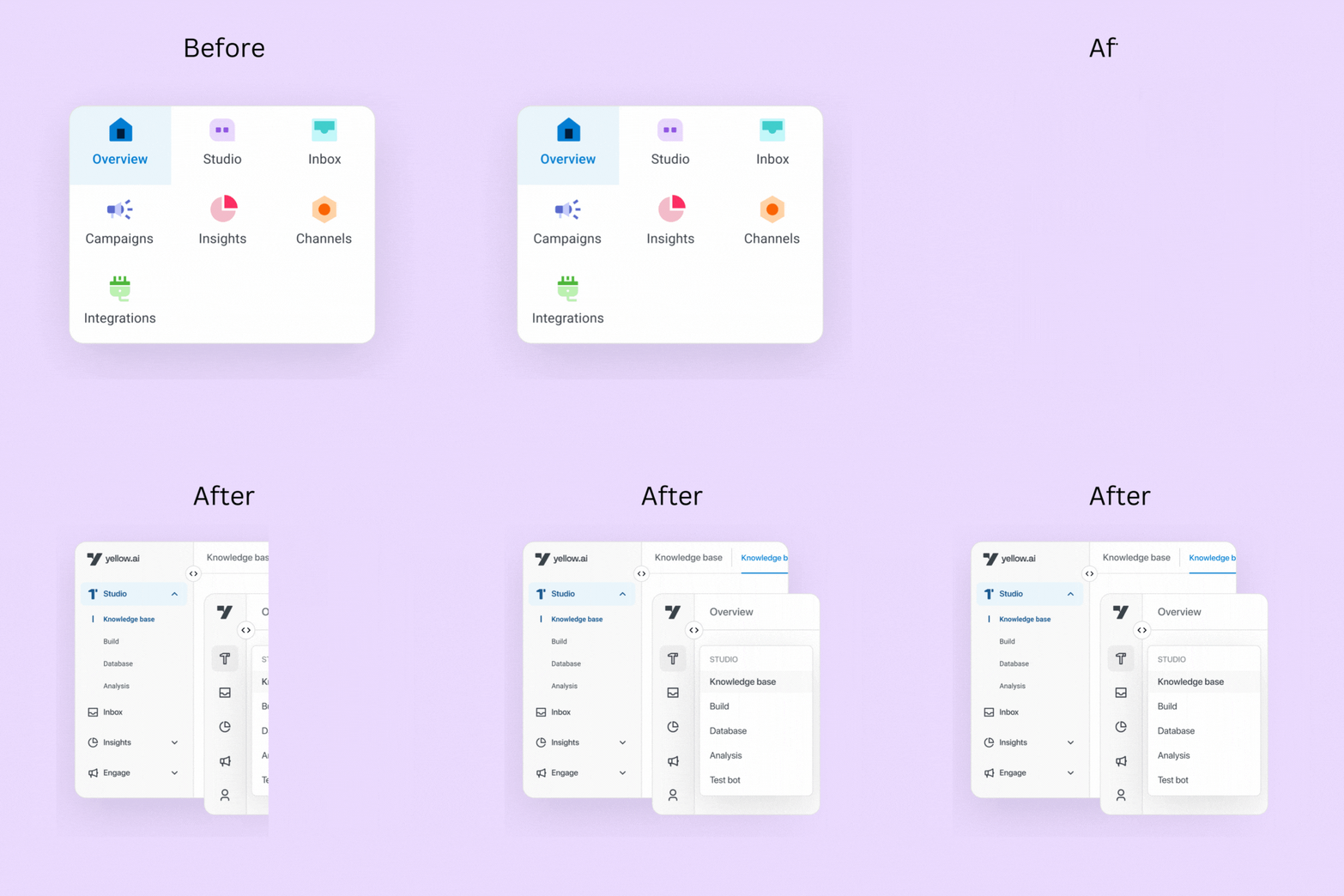
Before
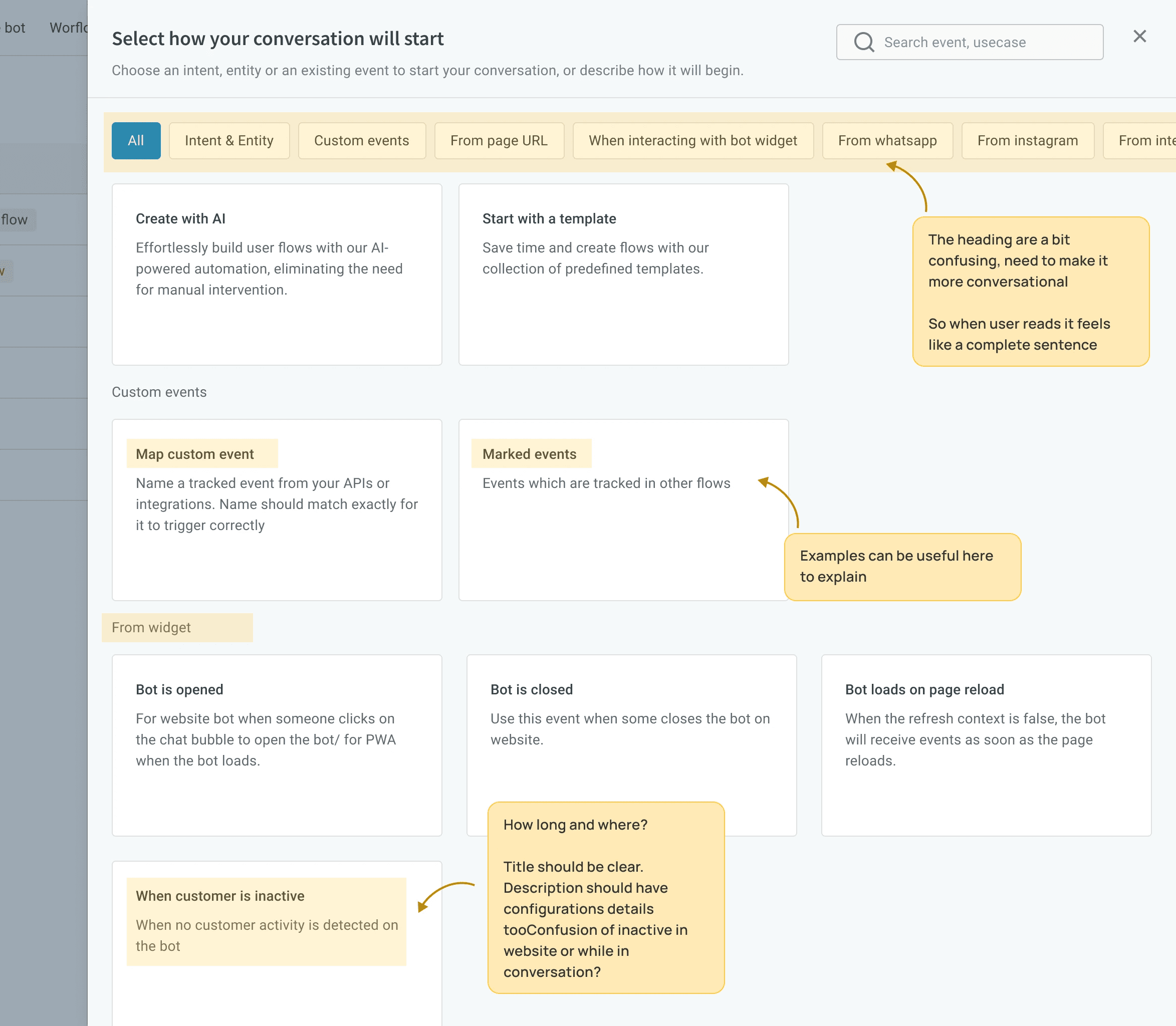
After
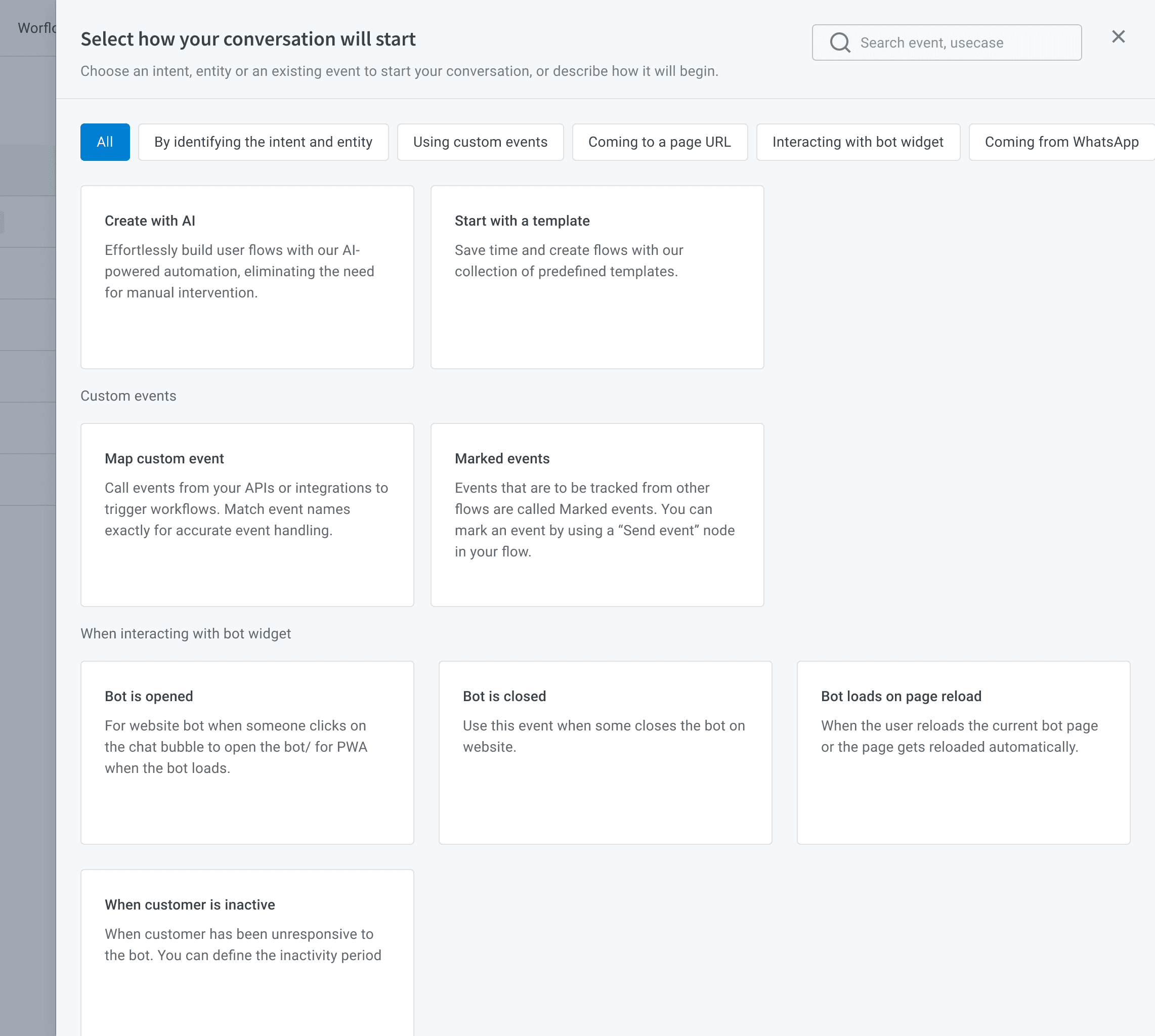
Simplified trigger descriptions and tab labels based on user feedback
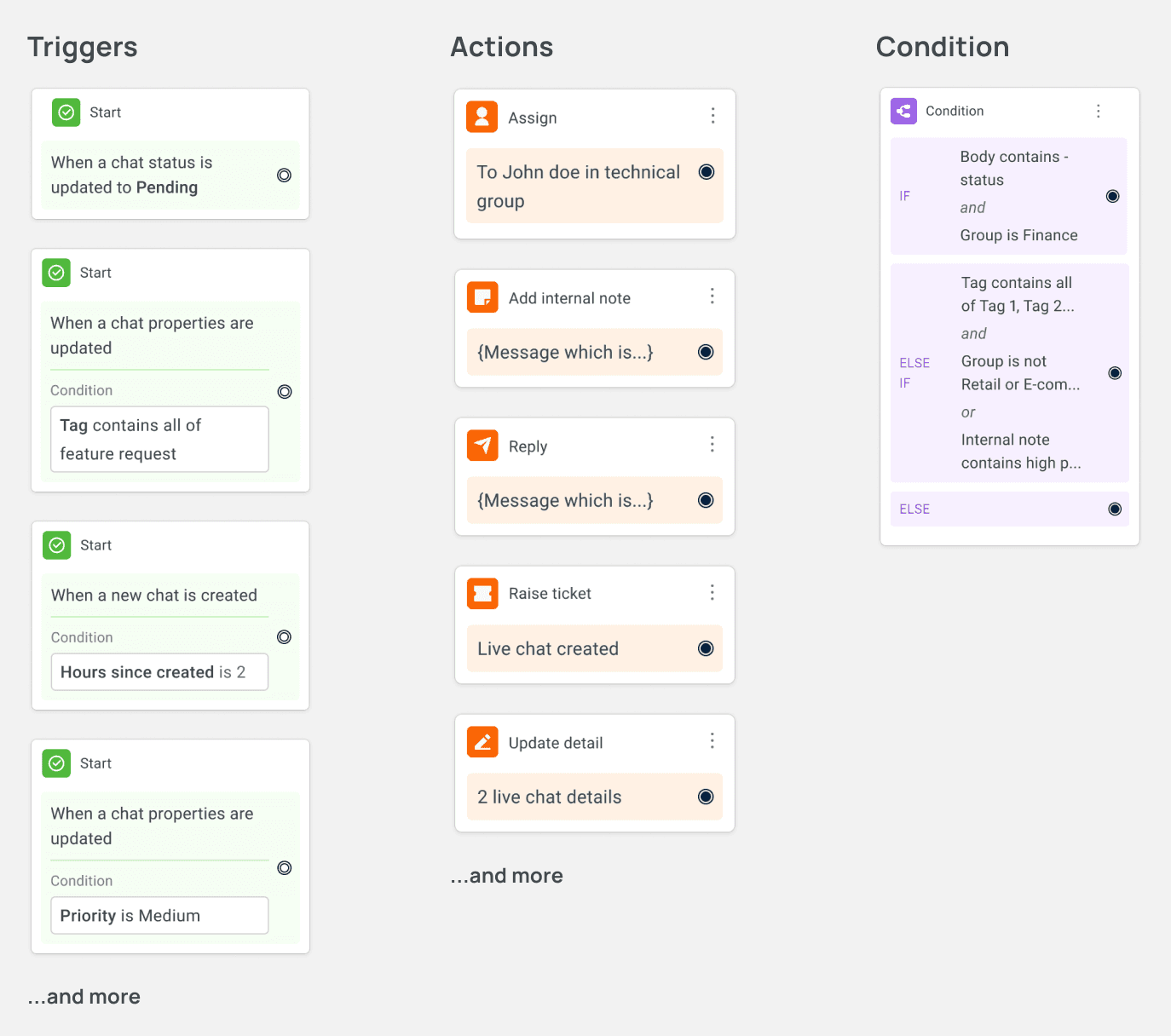
To ensure consistency and scalability, I designed a component-based system with three core building blocks
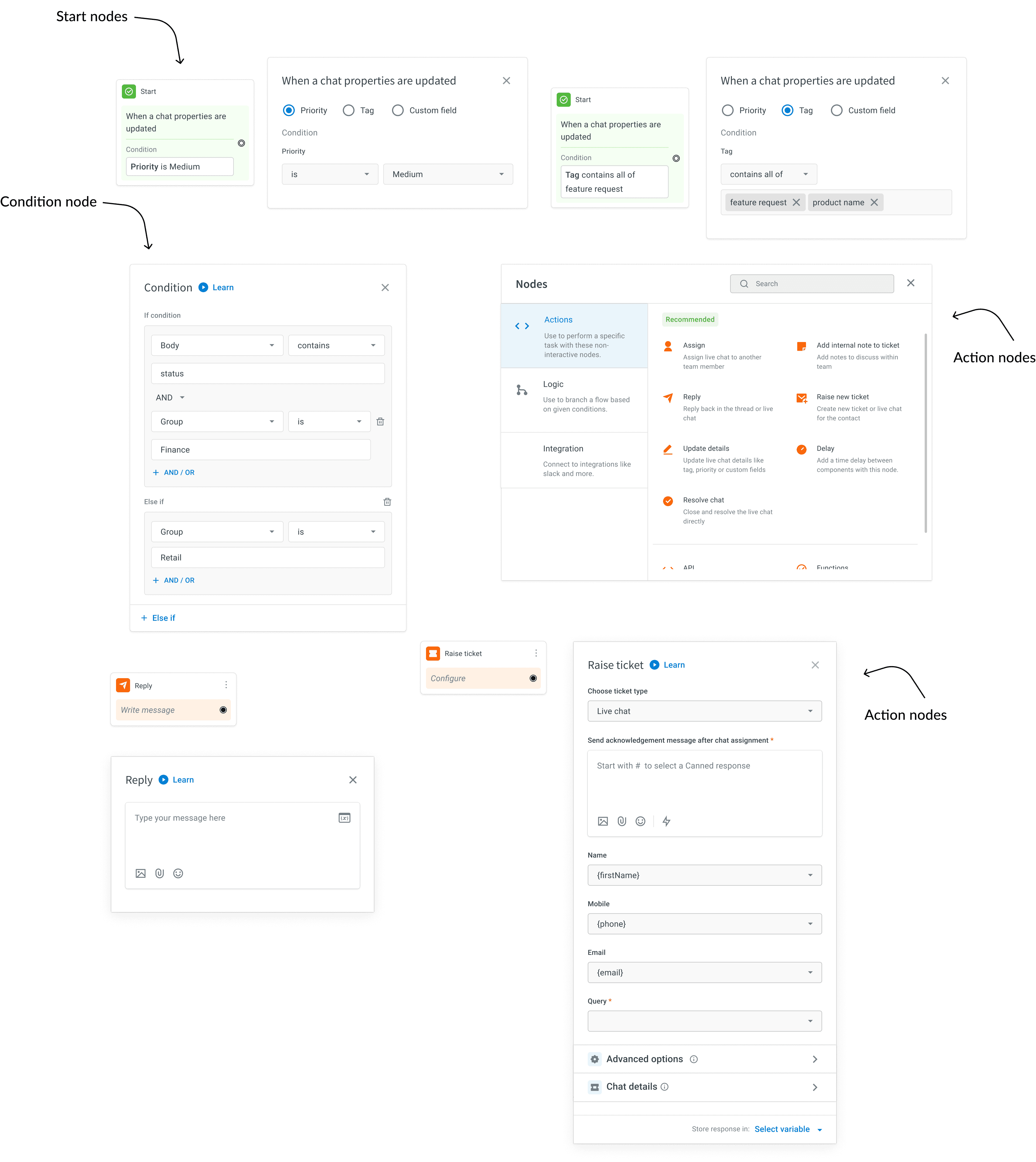
Core workflow components: Start nodes for triggers, Condition nodes for logic, and Action nodes for executing tasks
Workflows enabled support teams to automate repetitive tasks and freeing up agents to focus on complex customer issues. The no-code approach meant teams could create and deploy automations independently without engineering support.
60%
reduction in manual work
Support agents saved 3-4 hours daily
3x
faster response time
Automated ticket handling reduced wait time
95%
task completion rate
Users built workflows independently
14+
customers onboarded
Strong early adoption across support teams